The 30 April–1 May 2026 Holiday Bridge: How Vietnam Employers Can Maintain Momentum
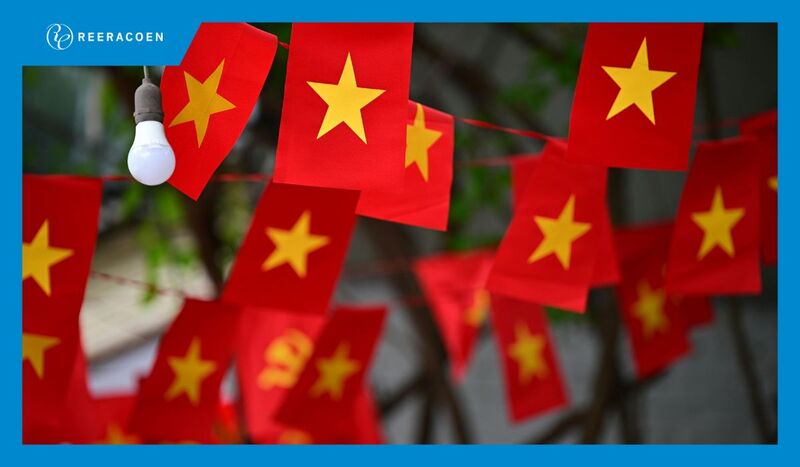
The 30 April–1 May 2026 Holiday Bridge: How Vietnam Employers Can Maintain Momentum
By Valerie Ong, Regional Marketing Manager, Reeracoen
Vietnam’s 30 April (Reunification Day) and 1 May (International Labour Day) are consecutive public holidays, and in 2026 they fall on a Thursday and Friday respectively. For most companies, this creates a natural four-day shutdown from 30 April through the weekend — and many are extending it further by granting additional leave on Wednesday 29 April, creating a full week’s break.
For FDI employers managing operations, client commitments, and hiring pipelines, this is a period that requires deliberate planning. Done well, it can be used to recharge teams, advance internal projects, and set up a stronger May than you would otherwise have. Done poorly, it becomes a momentum disruption that takes two weeks to recover from.
Business Continuity Planning for the Holiday Bridge
Define What ‘Essential Operations’ Means for Your Business
Not all functions need to operate at full capacity during the holiday period. Identify which operations require active coverage (customer-facing teams, logistics, security, compliance monitoring) and which can be fully suspended. Communicate the shutdown schedule to clients and suppliers at least 10 working days in advance — particularly for businesses with cross-border operations where the holiday may not be observed by the other party.
Use the Window for Internal Catch-Up and Planning
The holiday period is one of the most productive windows for internal work that gets crowded out by day-to-day operations: strategy reviews, performance data analysis, hiring pipeline reviews, compliance audits, process documentation, and team-level planning for Q2/Q3. Scheduling these activities in the week before the holiday, or assigning small teams to complete them during skeleton-crew days, creates a genuine productivity dividend.
Advance Your Hiring Pipeline
Counter-intuitively, the holiday period is often one of the best times to advance hiring pipelines. Candidates are not in interview mode, but they are often reflecting on their careers during extended breaks. A well-timed outreach from a recruiter or employer in the week before or immediately after the holiday can generate responses from candidates who would otherwise be too busy to engage. Schedule your post-holiday interviews for the week of 5–9 May to capitalise on this.
Retention: What the Holiday Tells Your Employees About Your Culture
How employers handle public holidays communicates a significant amount about their culture. Reeracoen’s Beyond the Paycheque 2026 study found that leave entitlement and flexibility around public holiday bridging rank in the top five factors Vietnamese professionals consider when evaluating employer quality.
Specifically, employees notice:
- Whether bridge days are granted proactively or grudgingly
- Whether managers contact teams during the holiday for non-urgent matters
- Whether return-to-office after the holiday is handled with flexibility or rigidity
FDI employers who use the holiday period as an opportunity to demonstrate care for their workforce — by granting bridge days where possible, communicating shutdown plans clearly, and ensuring managers respect the rest period — report lower post-holiday attrition than those who do not.
Post-Holiday: Setting Up a Strong May
The two weeks following the 30 April–1 May holiday are typically the most productive of Q2 for companies that plan well. Teams return refreshed, the Labour Day sentiment creates a natural moment for manager-led check-ins, and the calendar through to mid-June is relatively clear of other significant disruptions.
Three actions to schedule for the first week back (5–9 May):
- A brief all-hands or team-level update on Q2 priorities — framing the holiday as a reset, not a delay.
- First-round interviews for any roles in your pipeline that were paused during the holiday.
- A mid-year retention check-in calendar for managers — scheduling informal conversations with direct reports before the June performance review cycle begins.
Frequently Asked Questions
Do we have to grant a bridge day if 29 April is not a public holiday?
No. Bridge days are at employer discretion in Vietnam unless specified in the employment contract or company policy. However, many FDI companies grant them as a competitive benefit, and employees in companies that do not will often take annual leave. The practical question is not whether you are legally required to grant it, but whether the goodwill and morale benefit of doing so outweighs the operational impact.
How should we communicate the shutdown to international clients?
Send a brief, professional notification at least 10 business days before the holiday, specifying your last working day, emergency contact arrangements, and first working day after the break. Include a Vietnamese context note for international clients unfamiliar with the significance of 30 April in Vietnam.
Can we require employees to work during the public holiday?
Yes, but under Vietnam’s Labour Code, work on public holidays must be compensated at 300% of the standard daily rate (or 400% for night shift work). This applies to the actual holiday dates (30 April and 1 May). Any additional days granted as bridge days are governed by your company policy, not the public holiday compensation provision.
|
Planning Your Q2 Hiring Pipeline? Reeracoen Vietnam’s consultants can help you advance your search during and after the holiday period — so you are not starting from zero when the market picks up in May. |
|
Speak to a Reeracoen Vietnam Consultant |
Download the Vietnam Salary Guide 2025–2026 |
Related Articles
You may also find these useful:
-
Labour Day 2026: What Vietnam’s Workforce Data Tells Employers About Retention
-
Salary Expectations in Vietnam Q2 2026: What Employers Must Budget
-
End of Q2 2026: A Talent Review Checklist for Vietnam Employers
About the Author
|
Valerie Ong Regional Marketing Manager, Reeracoen Valerie leads content and market insights for Reeracoen across Southeast Asia. She works closely with Reeracoen’s specialist recruitment consultants to translate hiring data, salary benchmarks and labour market trends into practical guidance for employers and professionals. Her work draws on Reeracoen’s proprietary research including the annual Salary Guide, Hiring Pulse, and Hiring Manager Survey. Language note: This article is published in English. Reeracoen Vietnam also publishes selected content in Japanese for our bilingual and Japanese-speaking professional community. |
References
- Vietnam Labour Code 2019, Chapter VIII: Working Hours and Rest Periods — thuvienphapluat.vn
- Reeracoen Beyond the Paycheque 2026 — Employee Sentiment Study — reeracoen.com.vn
- Vietnam Official Public Holiday Calendar 2026 — molisa.gov.vn

Disclaimer:
The information provided in our blog articles is intended for general informational purposes only. It is not a substitute for professional advice and should not be relied upon as such.
While we strive to provide accurate and up-to-date information, the ever-evolving nature of certain topics may result in content becoming outdated or inaccurate over time. Therefore, we recommend consulting with qualified professionals or experts in the respective fields for specific advice or guidance. Any actions taken based on the information contained in our blog articles are solely at the reader's discretion and risk. We do not assume any responsibility or liability for any loss, damage, or adverse consequences incurred as a result of such actions.
We may occasionally provide links to external websites or resources for further information or reference. These links are provided for convenience and do not imply endorsement or responsibility for the content or accuracy of these external sources. Our blog articles may also include personal opinions, views, or interpretations of the authors, which do not necessarily reflect the views of our organisation as a whole. We encourage readers to verify the accuracy and relevance of information presented in our blog articles and to seek professional advice when needed.
Your use of this website and its content constitutes acceptance of this disclaimer.
Related Post
 “Tôi luôn ở đây vì bạn”: Khi Reeracoen Way không chỉ còn là lời nóiGeneral
“Tôi luôn ở đây vì bạn”: Khi Reeracoen Way không chỉ còn là lời nói Tại một ngôi làng dành cho trẻ em ở Philippines, cách xa những văn phòng...
- “I’m Here for You”: When the Reeracoen Way Became More Than WordsGeneral
“I’m Here for You”: When the Reeracoen Way Became More Than Words In a children’s village in the Philippines, far from Reeracoen’s offices across...
 3 Thách thức Tuyển Dụng Nhân Sự Lớn Doanh nghiệp Việt Nam Phải Đối Mặt trong 2026General
3 Thách thức Tuyển Dụng Nhân Sự Lớn Doanh nghiệp Việt Nam Phải Đối Mặt trong 2026 KẾT QUẢ CHÍNH — Báo cáo Xu hướng và Kỳ vọng Người Lao động Việt...
- The Triple Constraint: Why Vietnam Employers Are Losing the Talent War on Three Simultaneous Fronts in 2026General
The Triple Constraint: Why Vietnam Employers Are Losing the Talent War on Three Simultaneous Fronts in 2026 KEY FINDINGS — Vietnam Worker...