Ho Chi Minh City vs Hanoi: Why Vietnam's Two Talent Markets Require Different Strategies
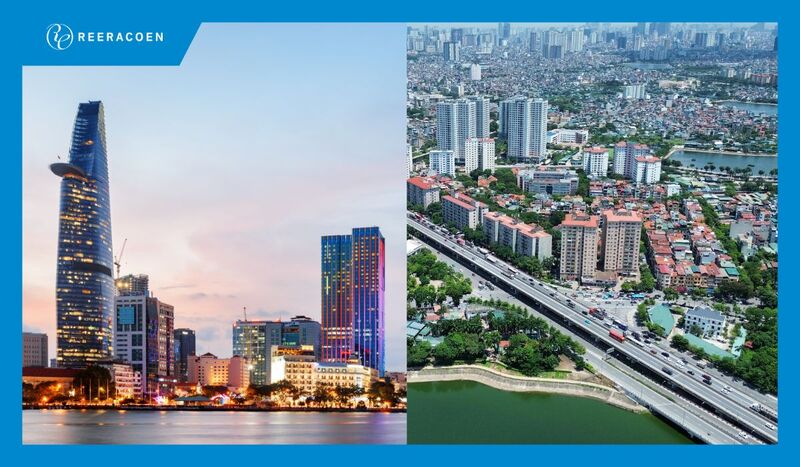
Ho Chi Minh City vs Hanoi: Why Vietnam's Two Talent Markets Require Different Strategies
Market Context
Vietnam's two major cities share the same currency, the same legal framework, and the same general economic trajectory. But for employers making talent decisions, they are meaningfully different markets. Workers in Ho Chi Minh City and Hanoi diverge on what they want from employment, how they respond to retention efforts, how mobile they are, and how they think about their long-term career ambitions.
These differences have practical implications for any organisation that recruits, retains, or manages professionals in both cities. Running a single national talent strategy, with the same messaging, the same retention levers, and the same employer value proposition, is likely to underperform in at least one market.
The Vietnam Worker Sentiment Study 2026, conducted by Reeracoen Vietnam across 254 professionals in the first half of 2026, provides the most detailed city-level comparison to date. The study included 138 respondents from Ho Chi Minh City and 65 from Hanoi. This article extracts the findings most relevant to employers operating across both cities.
What Workers Want: The Sharpest Divergence
The most striking difference between the two cities lies in what workers say matters most when evaluating a new job opportunity.
HCMC workers lead with work-life balance (21%), which they place above base salary (19%). Hanoi workers do the opposite: salary comes first by a wide margin (30%), with training and upskilling second (16%) and work-life balance barely registering (9%).
The framing that emerges from the data is instructive. HCMC workers are experience-led: they want balance, culture, and quality of life alongside their career. Hanoi workers are more growth-led: they prioritise tangible career and financial progression. These are not subtle differences. They point to fundamentally different things that an employer needs to emphasise to resonate in each market.
The advisory insight from the study is direct: a single employer value proposition pitched at the national level risks under-serving both cities. In HCMC, lead with flexibility, culture, and wellbeing. In Hanoi, lead with salary competitiveness, learning investment, and clear advancement pathways.
Mobility and Search Intensity
Both cities show high job-switching intent, but the urgency differs. 65% of HCMC respondents plan to change jobs in 2026, compared to 59% in Hanoi. More significantly, 47% of HCMC respondents describe themselves as very actively searching and applying right now, versus 39% in Hanoi. Hanoi workers are more concentrated in the passive browsing category (48%), suggesting a slightly longer decision horizon.
For employers, the implication is that HCMC is a hotter immediate market: candidates are more likely to be in active conversations and expect faster hiring processes. Hanoi has more latent talent that can be engaged over a slightly longer runway, but with a sharper emphasis on development and career change opportunities.
The reasons workers give for considering leaving are consistent across both cities, with salary, advancement, and work-life balance leading in both. However, Hanoi workers place notably higher emphasis on limited learning opportunities (34% vs 21% in HCMC) and desire to change industry (21% vs 14%), suggesting a workforce more actively seeking reinvention rather than simply a better version of their current role.
Retention: Different Levers, Different Weights
The city-level retention data is where the divergence becomes most commercially significant. In Hanoi, 71% of workers cite a significant salary increase as the factor that would make them stay, compared to 50% in HCMC. The study's framing captures it precisely: in Hanoi, a salary increase is not one retention lever among many. It is the lever.
HCMC workers distribute their retention expectations more broadly. Better bonuses and benefits register at 44%, better work-life balance at 44%, clear career advancement paths at 29%, and recognition and appreciation at 29%. Flexible working policy is cited by 22% of HCMC respondents as a retention factor, compared to 34% in Hanoi, a counterintuitive result that may reflect Hanoi's historically more formal corporate culture.
The practical implication for multi-city employers is that retention investment should be calibrated differently by location. The same budget, deployed differently, will yield better outcomes in each market. In Hanoi, ensure compensation benchmarking is current and visible. In HCMC, invest across the full retention toolkit including flexibility, recognition, clear advancement structures, and wellbeing.
Working Arrangement Preferences
Both cities prefer hybrid working arrangements, but HCMC leans harder into it. 69% of HCMC respondents favour hybrid work, compared to 61% in Hanoi. More notably, Hanoi shows a stronger preference for primarily or fully in-office work: 37% combined, versus 25% in HCMC.
This is consistent with Hanoi's more formal corporate culture, higher proportion of government-adjacent and traditional industries, and typically shorter commute distances. For employers with stricter in-office expectations, Hanoi will be a relatively more receptive audience, though hybrid remains the majority preference in both markets.
International Ambitions: Common Destination, Different Second Choices
Both cities show strong openness to overseas work, with approximately 70% of respondents in each either open to or actively considering international careers within three years. Japan leads as the top destination in both markets: 37% in HCMC and 31% in Hanoi.
The meaningful difference lies in second and third preferences. HCMC workers are strongly drawn to Singapore (23%), reflecting the city's deep commercial ties and geographic proximity. Hanoi workers largely bypass Singapore in favour of Europe (24%) and Australia (16%), suggesting broader international ambition and a higher proportion targeting longer-distance opportunities.
For employers leveraging international career pathways as a talent advantage, the message should be calibrated accordingly. Japan-connected opportunities resonate strongly in both cities. In HCMC, Singapore-connected exposure is an additional attractor. In Hanoi, European and international market exposure carries relatively more weight.
Where the Two Cities Agree
Despite the differences, several findings are consistent across both cities and should be treated as national-level truths rather than city-specific signals.
Foreign-company preference is strong in both markets: 75% in HCMC and 70% in Hanoi. AI comfort levels are virtually identical: 80% comfortable or very comfortable in both cities. Upskilling demand is high and consistent across both markets. Japan leads as the top overseas destination in both cities. Perceived job instability is similarly widespread, with around 20 to 22% feeling unstable in both cities.
Building a Multi-City Talent Strategy
The strategic conclusion from this data is that Vietnam is not one talent market. A nationally consistent employer brand is valuable and important, but it should be built on city-level execution that reflects the different priorities, motivations, and career aspirations of HCMC and Hanoi professionals.
In practice, this means maintaining a consistent overall employer identity while localising the emphasis in job advertisements, candidate conversations, and retention communications. It means using different compensation benchmarks for the two markets rather than applying a single national pay scale. It means training recruitment managers and HR business partners to understand the specific context of the city they are operating in.
The organisations that build this capability will have a genuine competitive advantage in both cities. Those that apply a single playbook across Vietnam are likely leaving talent on the table in at least one of them.
For Employers and HR Leaders
Operating across Ho Chi Minh City and Hanoi? Our specialist teams in both cities can support your hiring and retention strategy with locally calibrated intelligence.
Submit a Hiring Inquiry | Request a Salary Benchmarking Consultation | Download the Full Report
For Professionals and Jobseekers
Whether you are based in Ho Chi Minh City, Hanoi, or elsewhere in Vietnam, Reeracoen can connect you with the right opportunity.
Browse Jobs in Vietnam | Register Your Profile with Reeracoen
Frequently Asked Questions
What are the main differences between hiring in Ho Chi Minh City and Hanoi?
The Vietnam Worker Sentiment Study 2026 identified several meaningful differences. HCMC workers prioritise work-life balance and company culture, while Hanoi workers place significantly more weight on salary and career advancement. HCMC is a more immediately active market, with 47% of workers very actively searching. Hanoi has a slightly longer decision horizon but stronger salary sensitivity. Retention levers also differ: in Hanoi, salary increase is the dominant retention factor (71%), while HCMC workers respond more broadly to flexibility, recognition, and career development.
Is Ho Chi Minh City or Hanoi a better market for hiring talent in Vietnam?
Both cities have significant and distinct talent pools. HCMC offers a larger pool of internationally oriented, digitally fluent professionals with strong commercial and technology sector representation. Hanoi offers deep pools of talent in government-adjacent sectors, manufacturing, and established industries, with workers who tend to be highly motivated by career development and salary clarity. The most effective approach is to understand and adapt to the specific dynamics of each city rather than treating them as interchangeable.
Do workers in Ho Chi Minh City and Hanoi have different salary expectations?
Yes. The study found that 30% of Hanoi workers name base salary as their top priority when evaluating a new role, compared to 19% in HCMC. For retention, 71% of Hanoi workers cite a significant salary increase as the key factor that would make them stay, versus 50% in HCMC. This suggests Hanoi employers need particularly strong salary competitiveness to both attract and retain talent, while HCMC employers have more flexibility to compete on non-monetary dimensions of the employment offer.
What working arrangement do employees prefer in HCMC vs Hanoi?
Hybrid working is preferred in both cities. 69% of HCMC workers favour hybrid arrangements, compared to 61% in Hanoi. Hanoi workers are more accepting of in-office requirements: 37% prefer mainly or fully in-office work, compared to 25% in HCMC. Employers with office-first policies will find a more receptive audience in Hanoi, though hybrid remains the majority preference in both markets.
Are overseas career aspirations different in HCMC and Hanoi?
Both cities show strong interest in overseas careers, with around 70% open to or actively considering international work within three years. Japan leads as the top destination in both markets. The key difference is in second preferences: HCMC workers favour Singapore, reflecting geographic proximity and commercial ties, while Hanoi workers are more drawn to Europe and Australia, suggesting broader international ambition.
Related Articles
You may also find these useful:
- Vietnam's Workforce in 2026 Is Not Waiting: Six Findings Every Employer Needs to Know
- Why Retention Is Now a Revenue Issue, Not Just an HR Metric
- Why Japanese Companies in Vietnam Have a Talent Advantage They Are Not Using
About the Author
Valerie Ong
Regional Marketing Manager, Reeracoen Group
Valerie leads content and market insights for Reeracoen across Asia. She works closely with Reeracoen's specialist recruitment consultants to translate hiring data, salary benchmarks and labour market trends into practical guidance for Vietnam's employers and professionals. Her work draws on Reeracoen's proprietary research including the annual Salary Guide, Hiring Pulse, and Hiring Manager Survey.
Language note: This article is published in English. Reeracoen Vietnam also publishes selected content in Vietnamese and Japanese for our local and bilingual professional community.
References
Reeracoen Vietnam. (2026). Vietnam Worker Sentiment Study 2026. Reeracoen Vietnam Co., Ltd. Survey conducted 1H 2026, n=254.

Disclaimer:
The information provided in our blog articles is intended for general informational purposes only. It is not a substitute for professional advice and should not be relied upon as such.
While we strive to provide accurate and up-to-date information, the ever-evolving nature of certain topics may result in content becoming outdated or inaccurate over time. Therefore, we recommend consulting with qualified professionals or experts in the respective fields for specific advice or guidance. Any actions taken based on the information contained in our blog articles are solely at the reader's discretion and risk. We do not assume any responsibility or liability for any loss, damage, or adverse consequences incurred as a result of such actions.
We may occasionally provide links to external websites or resources for further information or reference. These links are provided for convenience and do not imply endorsement or responsibility for the content or accuracy of these external sources. Our blog articles may also include personal opinions, views, or interpretations of the authors, which do not necessarily reflect the views of our organisation as a whole. We encourage readers to verify the accuracy and relevance of information presented in our blog articles and to seek professional advice when needed.
Your use of this website and its content constitutes acceptance of this disclaimer.
Related Post
 Vietnam's 2026 Growth Engine: What Rising Revenue and Supply Chain Diversification Mean for EmployersManagement
Vietnam's 2026 Growth Engine: What Rising Revenue and Supply Chain Diversification Mean for Employers The Story Behind the Survey Vietnam enters...
- Động Lực Tăng Trưởng Việt Nam 2026: Doanh Thu Tăng Và Đa Dạng Hóa Chuỗi Cung Ứng Mang Lại Điều Gì Cho Doanh Nghiệp?Management
Động Lực Tăng Trưởng Việt Nam 2026: Doanh Thu Tăng Và Đa Dạng Hóa Chuỗi Cung Ứng Mang Lại Điều Gì Cho Doanh Nghiệp? Câu chuyện phía sau khảo sát...
 Nhân Tài Logistics và Chuỗi Cung Ứng 2026: Ý Nghĩa Của Sự Tăng Trưởng FDI Với Chiến Lược Tuyển DụngManagement
Nhân Tài Logistics và Chuỗi Cung Ứng 2026: Ý Nghĩa Của Sự Tăng Trưởng FDI Với Chiến Lược Tuyển Dụng CÁC KẾT QUẢ CHÍNH — Nghiên cứu Xu hướng của...
- Logistics and Supply Chain Talent in Vietnam 2026: What FDI Growth Means for Your Hiring StrategyManagement
Logistics and Supply Chain Talent in Vietnam 2026: What FDI Growth Means for Your Hiring Strategy KEY FINDINGS — Vietnam Worker Sentiment Study...