International Children’s Day 2026: Six Career Lessons That Children Model Naturally and That Most Adults Have Forgotten
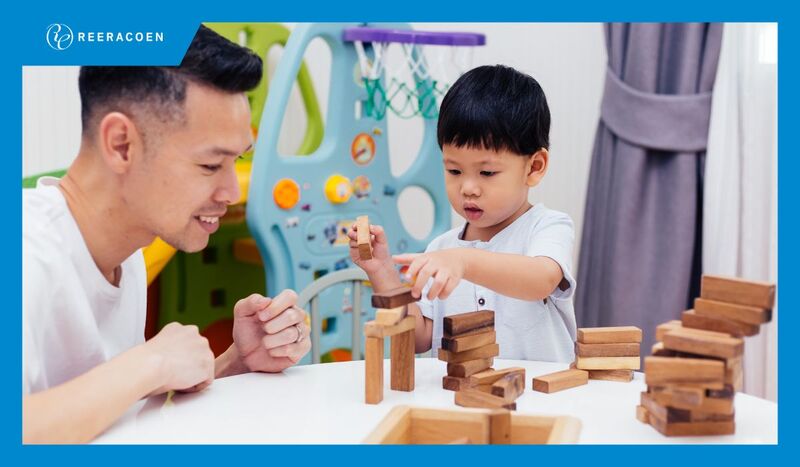
International Children’s Day 2026: Six Career Lessons That Children Model Naturally and That Most Adults Have Forgotten
By Valerie Ong, Regional Marketing Manager, Reeracoen Group
International Children’s Day falls on 1 June. It is usually framed as a day to celebrate children. But it is also, if you are paying attention, a useful mirror for adults — particularly professionals navigating the mid-year stretch of a demanding year.
Children are not career strategists. But they model several behaviours that research on adult learning, career development, and professional effectiveness consistently identifies as markers of high performance. Most adults have these capabilities at age six and have systematically trained themselves out of them by age thirty.
Here are six of them.
1. They Ask Questions Without Fear of Looking Stupid
A five-year-old asks ‘why’ approximately 300 times per day. A new employee in a professional environment asks a fraction of that, because the adult workplace has taught them that asking questions signals incompetence. The result: misunderstandings propagate, assumptions compound, and problems that could have been surfaced in week one become crises in week eight.
The professionals who progress fastest are almost always the ones willing to ask the question in the room that everyone else is afraid to ask. That willingness does not come from arrogance — it comes from having retained, or recultivated, the child’s relationship with not-knowing.
2. They Try Things Without Needing Certainty First
Children do not wait until they understand walking theory before they try to stand up. They try, they fall, they try again. Adult professionals increasingly require certainty before acting — a complete brief, a guaranteed outcome, a precedent to point to. In a rapidly changing talent market where the highest-value skills are precisely the ones without established precedents, this caution is a competitive disadvantage.
The practical application: identify one thing you have been waiting to start until conditions are right. Start it in the next two weeks, imperfectly.
3. They Are Completely Honest About What They Do Not Know
‘I don’t know’ is something children say freely and without shame. Professional adults often cannot say it at all, substituting confident-sounding vagueness instead. The irony is that hiring managers and senior leaders consistently rate intellectual honesty — including the willingness to say ‘I don’t know, but I’ll find out’ — as one of the highest-value professional qualities they look for.
4. They Recover From Failure Quickly
A child who falls, cries for thirty seconds, and then runs back to what they were doing is exhibiting a recovery pattern that most adults completely lose. Career setbacks — a bad performance review, a lost pitch, a rejected application, a role that did not work out — can sit with adult professionals for months, affecting their confidence and their willingness to take future risks. The capacity to recover quickly is not denial; it is a learnable skill.
5. They Focus Completely on What Is in Front of Them
Watch a four-year-old with a toy they love. They are not thinking about their to-do list, their manager’s opinion, or what is happening on their phone. The quality of attention they bring to the present object is total. Deep focus — the ability to do one thing well without fragmented attention — is one of the most consistently undervalued professional capabilities in a world of constant notification.
Cal Newport’s research on knowledge work productivity suggests that the ability to produce high-quality work during distraction-free sessions is the primary differentiator between professionals who progress and those who plateau. Children have not yet lost this ability.
6. They Are Not Embarrassed to Ask for Help
Children ask for help constantly and specifically: ‘can you open this?’, ‘can you show me how?’, ‘will you sit with me while I do this?’. Adult professionals often experience asking for help as a personal failure rather than an efficiency tool. The result: they struggle alone with problems that a ten-minute conversation with the right person could resolve. The professionals with the strongest networks — the ones who progress fastest and land best in career transitions — are almost always excellent at asking for help specifically and generously.
The Mid-Year Application
You are now halfway through 2026. If the last six months have been characterised by over-caution, under-asking, slow recovery from setbacks, or fragmented attention that has prevented you from doing your best work — International Children’s Day is as good a moment as any to notice that, and to pick one of the six patterns above to deliberately recultivate in H2.
Which one is it?
Frequently Asked Questions
Is it realistic to apply childlike qualities in a professional environment?
Selectively, yes. The point is not to behave childishly — it is to recover specific cognitive and emotional capacities that children have and adults often lose: curiosity, honesty about not-knowing, willingness to try without certainty, and genuine recovery from failure. These are professional assets, not liabilities.
How do I recover more quickly from career setbacks?
By separating the event from the identity. A bad performance review is information about one period of performance — not a verdict on your capability or worth. Process it specifically: what can I learn from this? What will I do differently? Then act. The action is what ends the rumination.
What is the best career investment I can make in H2 2026?
Depends on your specific situation. But across profiles, the highest-return investments in H2 are: one targeted skill certification (AI tools, ESG, JLPT level upgrade), one salary conversation if it is overdue, and one genuine reconnection with your professional network. None of these require large amounts of time or money. They require the willingness to start.
|
Ready to Make H2 2026 Count? Reeracoen Vietnam’s consultants are active in the market through Q3. Whether you’re exploring options or just staying calibrated, we’re here to help. |
|
Talk to a Reeracoen Vietnam Consultant |
Download the Vietnam Salary Guide 2025–2026 |
Related Articles
You may also find these useful:
-
Vietnam Family Day 2026: How High-Performing Professionals Balance Career and Family
-
AI Skills Are the New Premium in Vietnam: Are You Actually Qualified for the Roles Paying 30% More?
About the Author
|
Valerie Ong Regional Marketing Manager, Reeracoen Group Valerie leads content and market insights for Reeracoen across Southeast Asia. She works closely with Reeracoen’s specialist recruitment consultants to translate hiring data, salary benchmarks and labour market trends into practical guidance for employers and professionals. Her work draws on Reeracoen’s proprietary research including the annual Salary Guide, Hiring Pulse, and Hiring Manager Survey. Language note: This article is published in English. Reeracoen Vietnam also publishes selected content in VIetnamese and Japanese for our bilingual and Japanese-speaking professional community. |
References
- Newport, C. — Deep Work: Rules for Focused Success in a Distracted World (2016)
- Vietnam International Children’s Day — molisa.gov.vn

Disclaimer:
The information provided in our blog articles is intended for general informational purposes only. It is not a substitute for professional advice and should not be relied upon as such.
While we strive to provide accurate and up-to-date information, the ever-evolving nature of certain topics may result in content becoming outdated or inaccurate over time. Therefore, we recommend consulting with qualified professionals or experts in the respective fields for specific advice or guidance. Any actions taken based on the information contained in our blog articles are solely at the reader's discretion and risk. We do not assume any responsibility or liability for any loss, damage, or adverse consequences incurred as a result of such actions.
We may occasionally provide links to external websites or resources for further information or reference. These links are provided for convenience and do not imply endorsement or responsibility for the content or accuracy of these external sources. Our blog articles may also include personal opinions, views, or interpretations of the authors, which do not necessarily reflect the views of our organisation as a whole. We encourage readers to verify the accuracy and relevance of information presented in our blog articles and to seek professional advice when needed.
Your use of this website and its content constitutes acceptance of this disclaimer.
Related Post
 “Tôi luôn ở đây vì bạn”: Khi Reeracoen Way không chỉ còn là lời nóiGeneral
“Tôi luôn ở đây vì bạn”: Khi Reeracoen Way không chỉ còn là lời nói Tại một ngôi làng dành cho trẻ em ở Philippines, cách xa những văn phòng...
- “I’m Here for You”: When the Reeracoen Way Became More Than WordsGeneral
“I’m Here for You”: When the Reeracoen Way Became More Than Words In a children’s village in the Philippines, far from Reeracoen’s offices across...
 3 Thách thức Tuyển Dụng Nhân Sự Lớn Doanh nghiệp Việt Nam Phải Đối Mặt trong 2026General
3 Thách thức Tuyển Dụng Nhân Sự Lớn Doanh nghiệp Việt Nam Phải Đối Mặt trong 2026 KẾT QUẢ CHÍNH — Báo cáo Xu hướng và Kỳ vọng Người Lao động Việt...
- The Triple Constraint: Why Vietnam Employers Are Losing the Talent War on Three Simultaneous Fronts in 2026General
The Triple Constraint: Why Vietnam Employers Are Losing the Talent War on Three Simultaneous Fronts in 2026 KEY FINDINGS — Vietnam Worker...